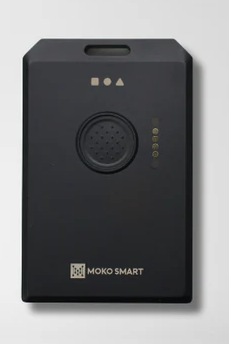
I just now learned of the existence of yet another small handheld LoRa mesh device that is intended to be nearly ready to use out of the box. This one is called the WisMesh tag (shopping cart), seen at right. It is made by a Chinese company called RAK Wireless. How does this device compare with other small handheld LoRa mesh devices that are intended to be nearly ready to use out of the box? I have not yet held a WisMesh tag in hand. Here are a few observations based on the public specs for the WisMesh tag.
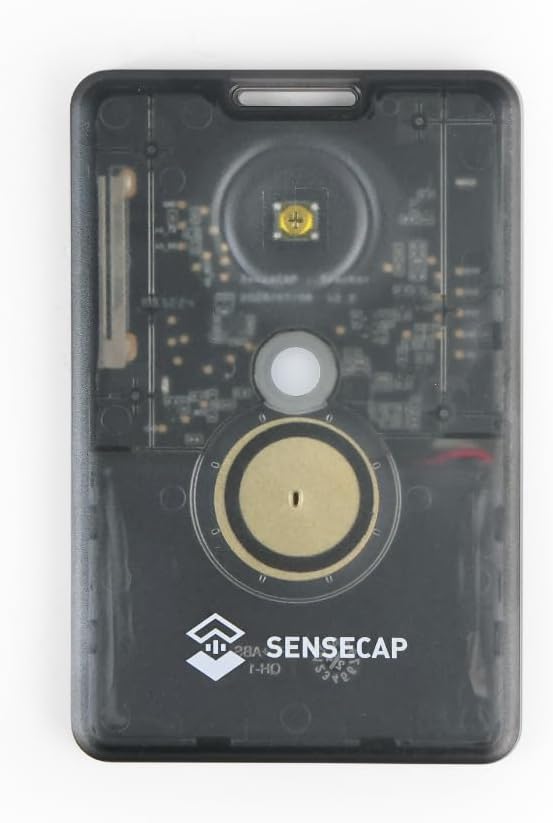
The manufacturer invites a direct comparison with the Seeed SenseCAP Card Tracker T1000-E (shopping cart), seen at right.
Processor. Both devices use Nordic’s nRF52840 controller.
LoRa radio. The SenseCAP uses Semtech’s LR1110 radio; the WisMesh uses the SX1262 radio.
GNSS radio. The SenseCAP uses Mediatek’s AG3335 radio; the WisMesh uses the AT6558R radio.
Size and weight. Both devices are roughly the size of a credit card, but the WisMesh is slightly thicker and larger and heavier. The SenseCAP is 85 x 55 x 6.5 mm at 32 grams, while the WisMesh is 92 x 59 x 7.5 mm at 47 grams.
Battery. The SenseCAP has a 700-mAh battery, while the WisMesh has a 1000-mAh battery.
Telemetry. The SenseCAP has a temperature sensor and an ambient-light sensor; the WisMesh does not. Both devices have an accelerometer, but as of right now there seems to be no firmware that makes use of the accelerometer in either device.
LEDs. The SenseCAP has one LED; the WisMesh has three LEDs. The three LEDs of the WisMesh device provide information about charging status, Bluetooth status, and message-waiting status.
Buttons. The SenseCAP has one button; the WisMesh has two buttons. The second button of the WisMesh device can do “reset” or can put the device into DFU mode.
IP rating. The SenseCAP has an IP65 rating, while the WisMesh has an IP66 rating.
Leave a Reply to Pros and cons of various handheld LoRa mesh devices – LoRa Mesh blog Cancel reply